We are finalizing our 2027 Adventures in San Diego Offerings!
Check out what we did in 2026
"'Adventures in San Diego' was a very meaningful day for me. It was a powerful reminder of the possibilities for learning through exposure to artwork and museum visits. Being immersed in that environment reinforced how thoughtfully designed experiences can spark curiosity, deepen observation, and invite multiple perspectives. It was especially valuable to explore and apply the thinking routines discussed earlier in the summit in authentic contexts. The day prompted me to reflect on how I might create similar opportunities for inquiry and reflection in my own classroom."
“Sunday's 'Adventures in San Diego were meaningful experiences that allowed me to have more opportunity with the Thinking Routines, yet in a casual and relaxed atmosphere."
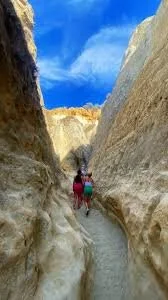
Observing & Pondering & Reflecting—In Nature! 10 am - 12:00 pm
Led by Jacob Ruth
Location: The San Elijo Lagoon Trails. 900 North Rios Ave., Solana Beach
Step away from the conference setting and onto the trails of the San Elijo Lagoon. After days of deep learning at the CoT Summit, join a community of outdoor-minded educators to synthesize your ideas with some fresh air and rich dialogue. Admire the majestic beauty of the North County San Diego Coastline! Saunter through a slot canyon and scamper up a ladder to an epic viewpoint! Pause to observe osprey and great blue heron and sandpipers! One of the most powerful ways to provoke deep thinking is to get outdoors, taking in a few deep breaths as you soak in the beauty of San Diego, observing and pondering and reflecting, while walking and talking. We will meet at San Elijo Lagoon and Nature Preserve to gear up, set the stage for the excursion, talk about the importance of outdoor education, and engage in the a few Thinking Routines that will provoke reflective thought and spark ideas to share with fellow deep-thinking hikers. Then we will set out to conquer what is known as Annie’s Slot Canyon, stopping along the way to point out San Diego flora and fauna. The goal will be to connect with outdoor-learning-minded educators, reflect and dialogue as it relates to creating cultures of thinking and making thinking visible, and just enjoy each other's company on the trail!
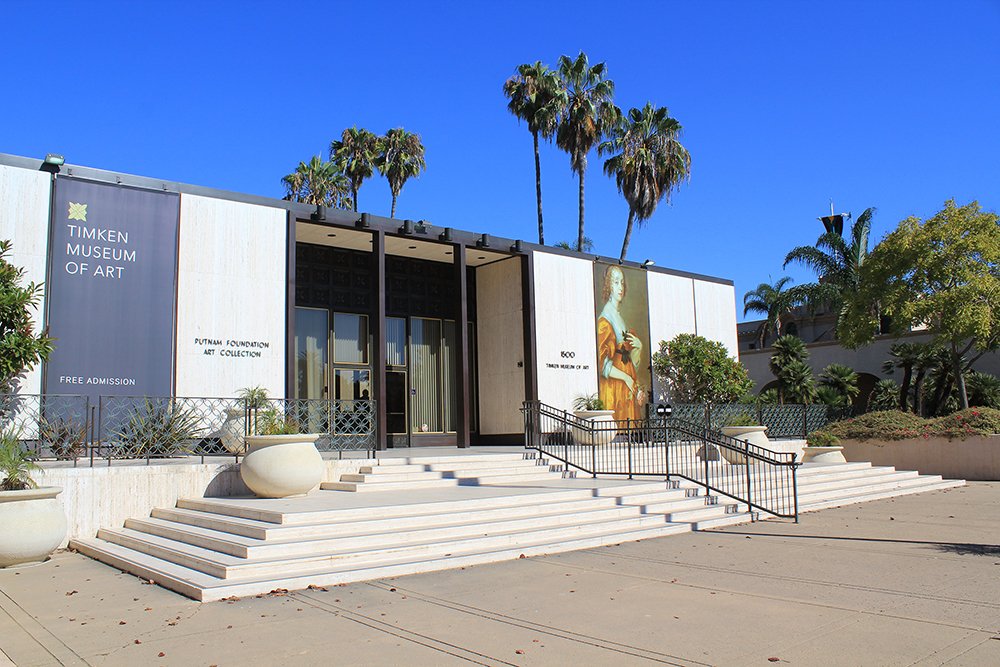
A Journey of Discovery: Project MUSE QUESTS 10:00 am - 12:00 pm
Led by Tina Blythe & Mark Church
Location: Timken Museum of Art in Balboa Park, 1500 El Prado, San Diego
Join us for a morning of play, connection, and curiosity at the beautiful Timken Museum of Art in Balboa Park! From 10:00 to 12:30ish, we invite you to step away from the traditional conference setting to experience Project MUSE QUESTS. Originally developed by Project Zero researchers several years ago, these QUESTS are designed to transform how we look at and engage with art. Your small group will select a work of art and embark on a collaborative "QUEST" using specialized booklets representing a variety of entry points--each page featuring a single, thought-provoking question. By taking turns posing questions and sharing perspectives, you’ll engage in a rich dialogue that emphasizes close looking, uncovering complexity, and wondering.
In this experience, the journey is just as important as the destination; it’s not about finding a single "right" answer, but about the joy of thinking together. This session is purely for your own replenishment and the pleasure of shared learning. The Timken Museum of Art offers free admission, and you are welcome to wrap up whenever you like to go enjoy the rest of your weekend. We would love to have you join us for this mindful and inspiring exploration!
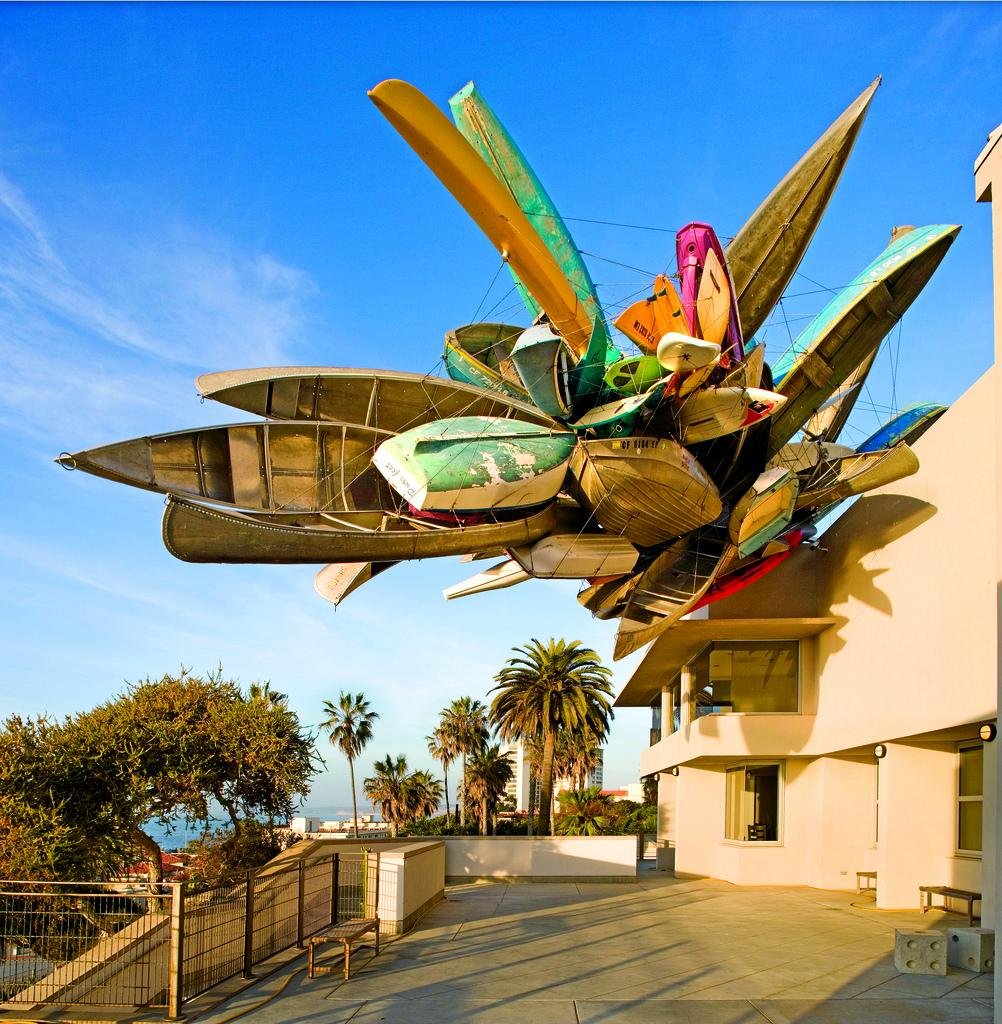
Sparking Questions. 1:00 - 3:00 pm
Led by Ron Ritchhart
Location: Museum of Contemporary Art in San Diego-La Jolla
Museums are powerful places to ignite curiosity—especially when we slow down, look closely, talk with others, and let questions lead the way. This approach becomes even more valuable when we encounter works that don’t immediately draw us in, feel unfamiliar, or seem hard to access at first glance. In this session, participants will use the thinking routine Looking: Ten Times Two and then combine it with the Question Formulation Technique, or QFT (developed by the Right Question Institute), to generate questions about the artwork. Along the way, you’ll learn the QFT process, experience how it fuels engagement, and see how looking closely supports questioning and the construction of understanding. You’ll engage in the process with two works of art at the Museum of Contemporary Art in San Diego-La Jolla: one that your group finds instantly compelling, and another that feels more distant or challenging. By comparing these experiences, we’ll surface insights from our own learning—insights we can then translate directly into strategies for sparking curiosity, especially when students don’t feel curious yet.
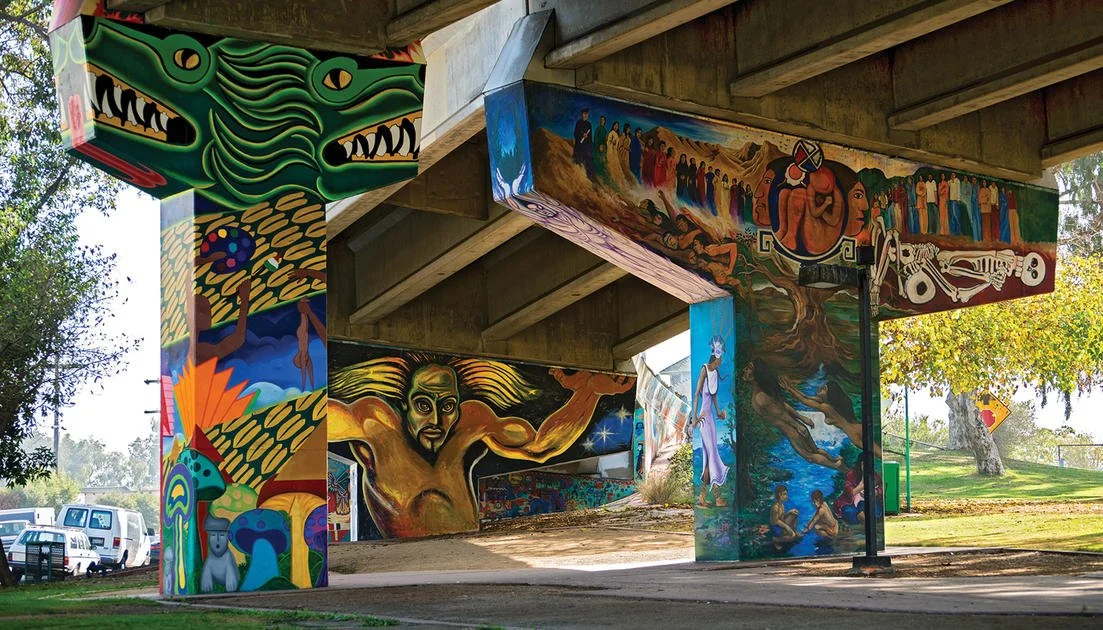
Under the Freeway, We Rise: Mapping Routes from Art to Justice. 1:00 - 3:00pm
Led by Gerald D. Smith Jr.
Location: Chicano Park (1949 Logan Ave., San Diego)
Built beneath a freeway meant to erase a community, Chicano Park stands as a living archive of resistance, identity, and collective power. In this session, participants will move through the park by choosing intentional routes that foreground different justice themes—resistance, cultural pride, solidarity, and intergenerational memory. Using visible thinking routines, participants will closely engage with murals as acts of public storytelling that document struggle, affirm community identity, and call people to action. This experience invites participants to slow down, listen deeply to the stories embedded in the art, and return to reflect on how public art can inspire social justice action in their own communities.
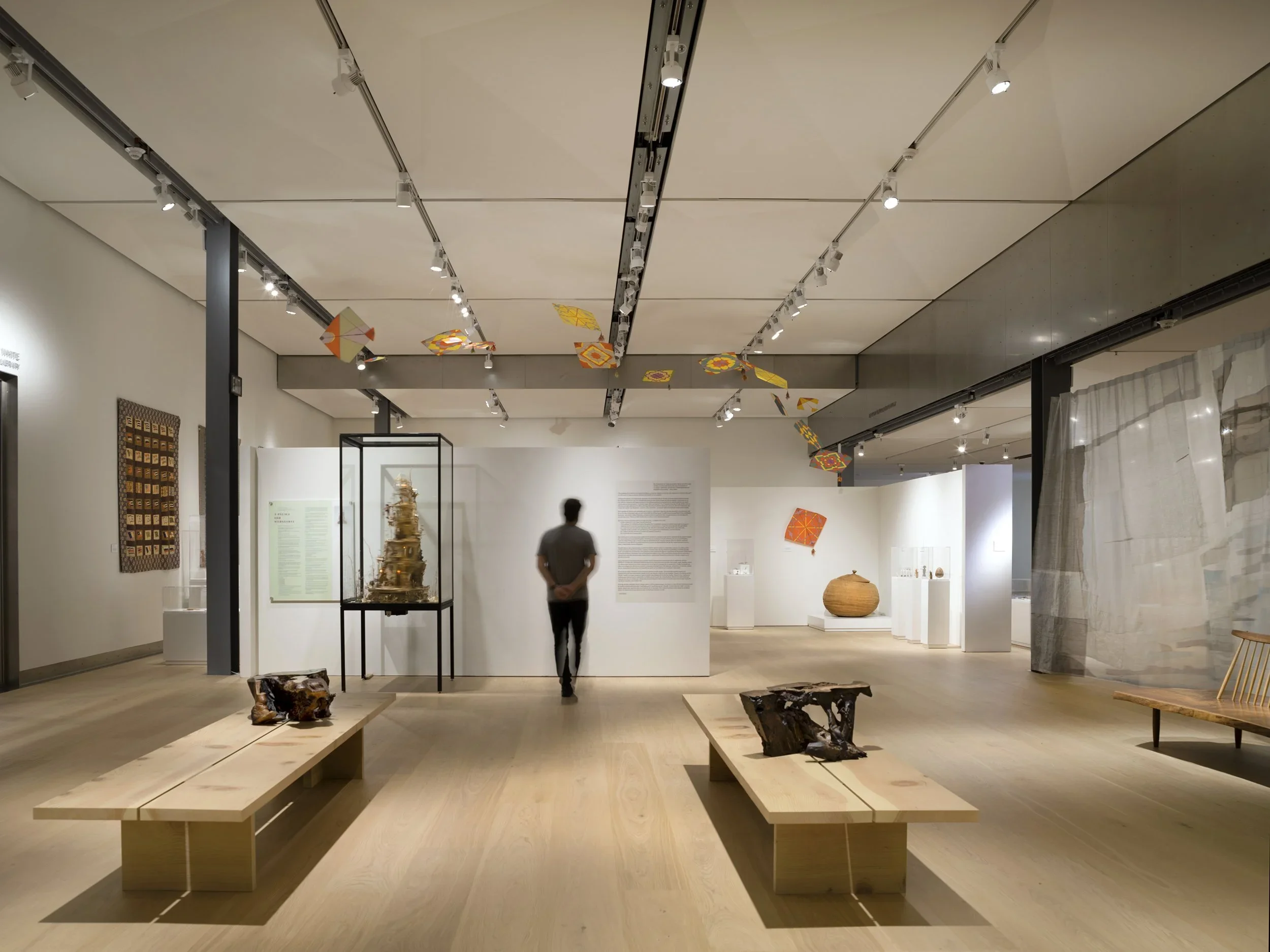
Expanding Our Approach to and Understanding of Folk Art. 1:00 - 3:00pm
Led by Bogdana Voitenko and Jim Reese
Location: Mingei International Museum Balboa Park, 1439 El Prado, San Diego
Folk art is unique in that it seeks to elevate our understanding of common objects that define a culture. By displaying and platforming these objects, the Mingei International Museum invites us to consider them as art, and thereby ask of them the same things we ask of masterworks: What is the artist's intent? What is the artist trying to communicate? Why did the artist make particular choices in the act of creating? For an object with utility, we tend to overlook these questions and reduce our answers to bare usefulness: A George Nakashima chair is only a seat, for example. A shift in perspective can offer insights often overlooked by the casual viewer. In this session, we will explore folk art in the Mingei's collection using thinking routines that will aim to expand our perspective, adjust our focus, and have us consider objects with a critical eye and an examination of intent we grant other works of art. Finally, we will discuss how we can take this means of analysis back to the classroom and apply it to class projects and lesson plans.